RULLY PREMIER CRULA BRESSANDE 2020
CLOS DE LA BRESSANDE MONOPOLEVIGNES DU CHÂTEAU DE RULLY
Grape Variety
Chardonnay.
Tasting notes
Colour: A beautiful, pale golden colour, light and brilliant.
Bouquet: A powerful bouquet combining floral aromas, fresh honey, and a refined, well-integrated oak influence.
Palate: A generous wine with yellow fruit notes such as peach and a rich, textured mouthfeel. The oak supports the structure of the wine and is complemented by a very long aromatic finish.
Food and wine pairing
Enjoy ideally with cold cuts, seafood (shellfish, crustaceans), hot first courses, fine fish or white meats in sauces. It can also beautifully enhance fine, dry or goat cheeses.
Serving suggestions
Serve between 12-14° C. (54-57°F.).
Ageing potential
This great wine will perfectly age for 5 years in good conditions.
Origin
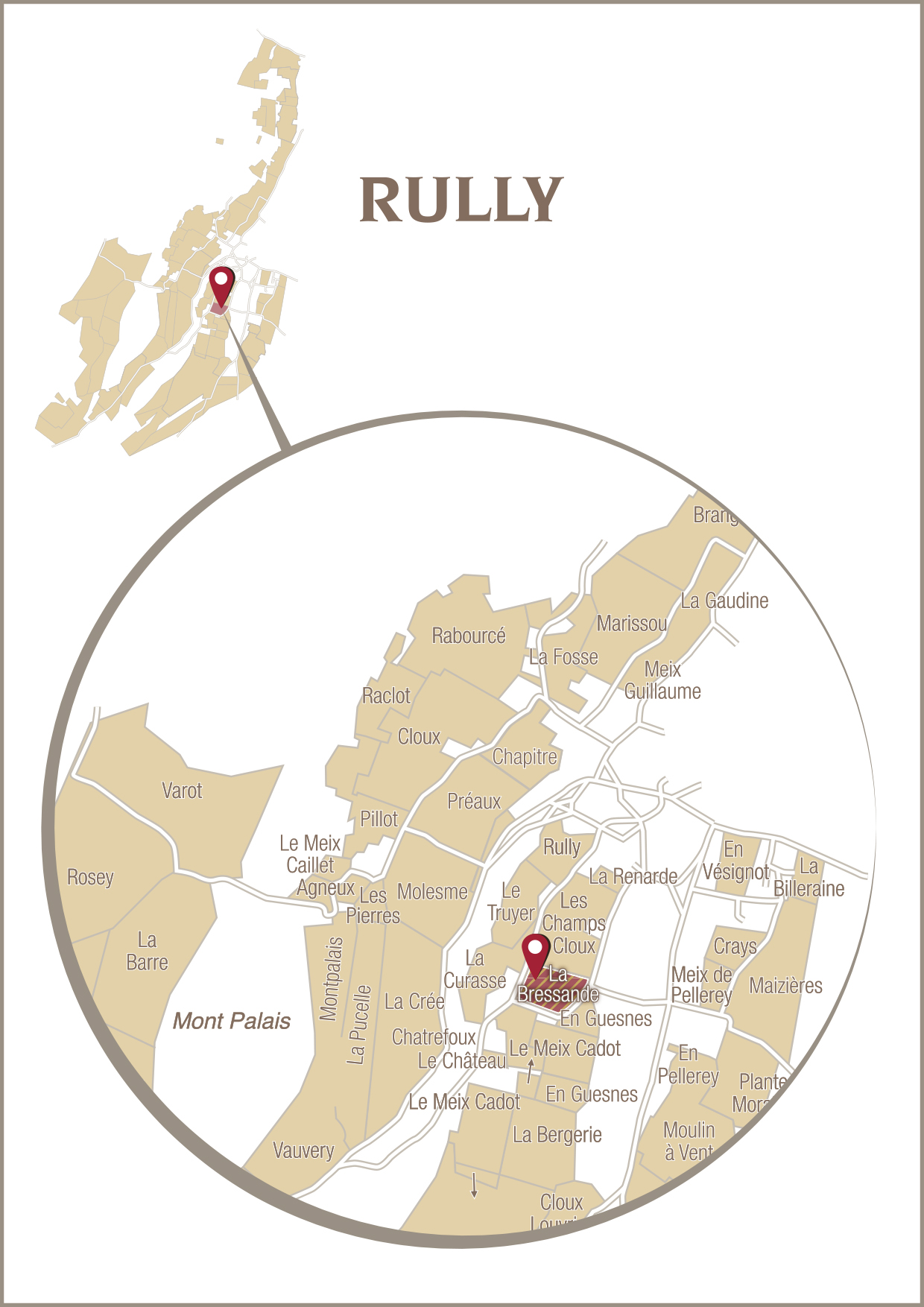
Rully is one of the famous village of the Côte Chalonnaise, in the South of Burgundy. A communal appellation made up of 23 Premiers Crus climats. White Rullys spread on a 261 ha area - including 68 ha of Premiers Crus - whereas red Rullys are produced on a 116 ha area of which 28 are Premiers Crus.
Terroir
Vignes du Château de Rully
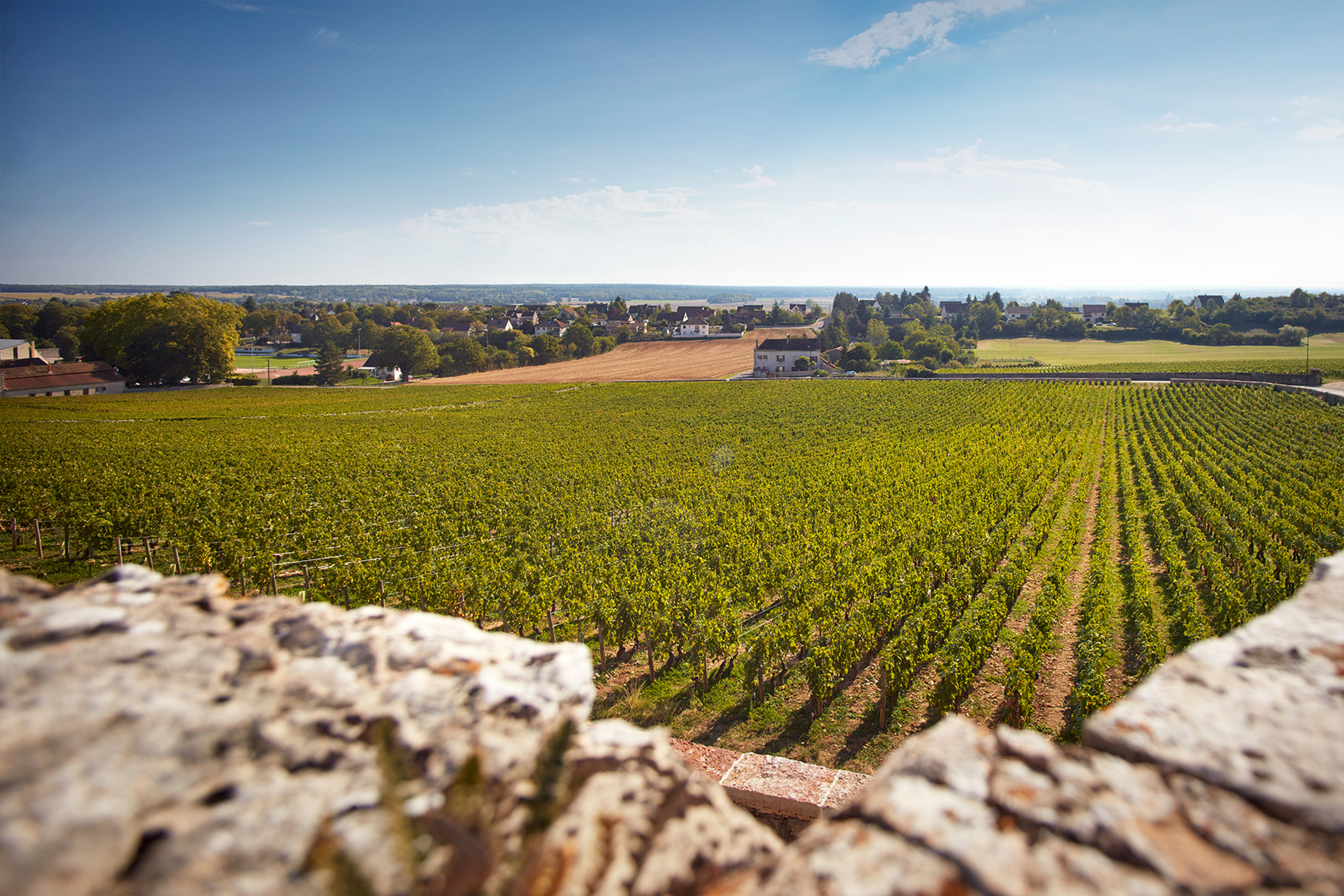
Rully Castle is a former 12th-century fortress that has become the emblem of the village of Rully. The estate vineyard is fully and exclusively farmed by Domaine de la Bressande.
The monopole "Clos de La Bressande" covers 2.60 hectares of vines in a walled vineyard (clos) at the foot of the château.
Here, Chardonnay flourishes on clay-limestone soils that highlight its freshness and fruity aromas. The vines of the Clos enjoy an ideal exposure: the south-east orientation allows them to capture maximum light and optimum sunshine, thus promoting good grape ripeness and, as a result, a fine balance between sugar and acidity.
The Premier Cru name "La Bressande" has been given both to the estate and this monopole vineyard. It could mean "the land facing the Bresse" or the land belonging to or grown by an inhabitant of the Bresse, the area facing the estate vineyards in the Saône valley.
Vinification and maturing
The Clos La Bressande parcel was hand-harvested over two days, on August 26 and 27. Following pneumatic pressing, the must underwent 16 to 24 hours of cold settling to remove coarse lees. Alcoholic fermentation took place in temperature-controlled stainless steel tanks, ensuring precise temperature control and a homogeneous cuvée before transfer to barrel at the end of fermentation. The wine was then aged on fine lees for 9 months in 228-litre barrels (25% new oak) and a small proportion of 500-litre demi-muids. Occasional bâtonnage (approximately twice a month) was carried out until malolactic fermentation to enhance aromatic complexity while preserving fruit purity and protecting the wine against oxidation and reduction.
Vintage : 2020
The 2020 vintage in the Côte Chalonnaise was one of the most heterogeneous in recent years. An early season, driven by a very mild winter, led to an early start to vine growth. Despite a cool and wet May, warm temperatures quickly returned, bringing a particularly hot summer.
Vine response varied greatly depending on the sector, with significant water stress in some areas causing ripening delays and yield losses. At the estate, the Rully vineyards generally withstood these conditions well, thanks to water flow in the subsoil that helped limit stress.
Ripeness levels (aromatic, phenolic, and technological) differed markedly from previous vintages, requiring close monitoring and careful harvest decisions, especially given variations within the same parcel. Harvest took place from August 24 to September 16, with excellent sanitary conditions, though careful sorting was needed.
Overall, yields were lower, particularly for reds. The 2020 wines already show promising colour, balance, freshness, and generous aromatic expression.