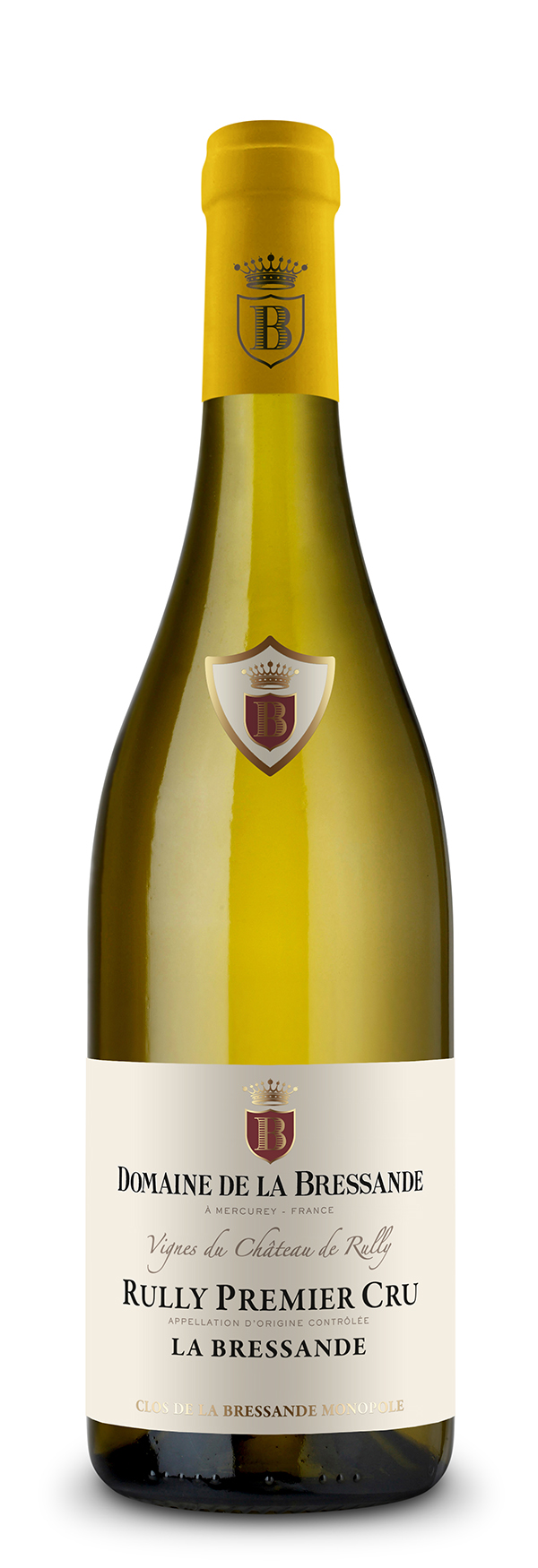
RULLY PREMIER CRULA BRESSANDE 2021
CLOS DE LA BRESSANDE MONOPOLEVIGNES DU CHÂTEAU DE RULLY
Grape Variety
Chardonnay.
Tasting notes
Colour: a beautiful golden colour.
Bouquet: a floral bouquet with notes of honey and a refined, elegant oak influence.
Palate: built on a fine mineral backbone, the wine is round and complex, with flavours of acacia and honey. It shows a lovely texture and a long finish.
Food and wine pairing
Enjoy ideally with cold cuts, seafood (shellfish, crustaceans), hot first courses, fine fish or white meats in sauces. It can also beautifully enhance fine, dry or goat cheeses.
Serving suggestions
Serve between 12-14° C. (54-57°F.).
Ageing potential
This great wine will perfectly age for 5 years in good conditions.
Origin
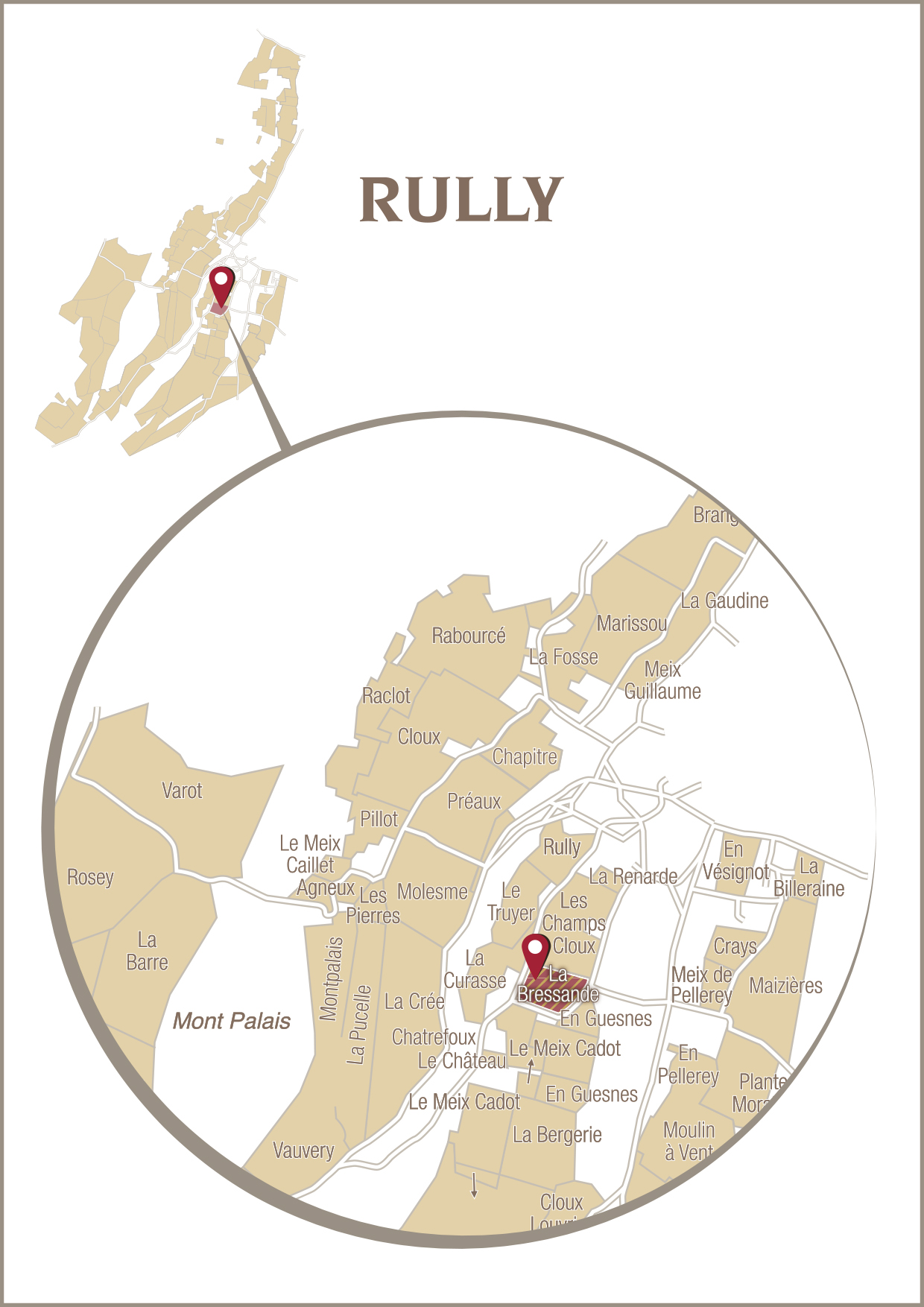
Rully is one of the famous village of the Côte Chalonnaise, in the South of Burgundy. A communal appellation made up of 23 Premiers Crus climats. White Rullys spread on a 261 ha area - including 68 ha of Premiers Crus - whereas red Rullys are produced on a 116 ha area of which 28 are Premiers Crus.
Terroir
Vignes du Château de Rully
Rully Castle is a former 12th-century fortress that has become the emblem of the village of Rully. The estate vineyard is fully and exclusively farmed by Domaine de la Bressande.
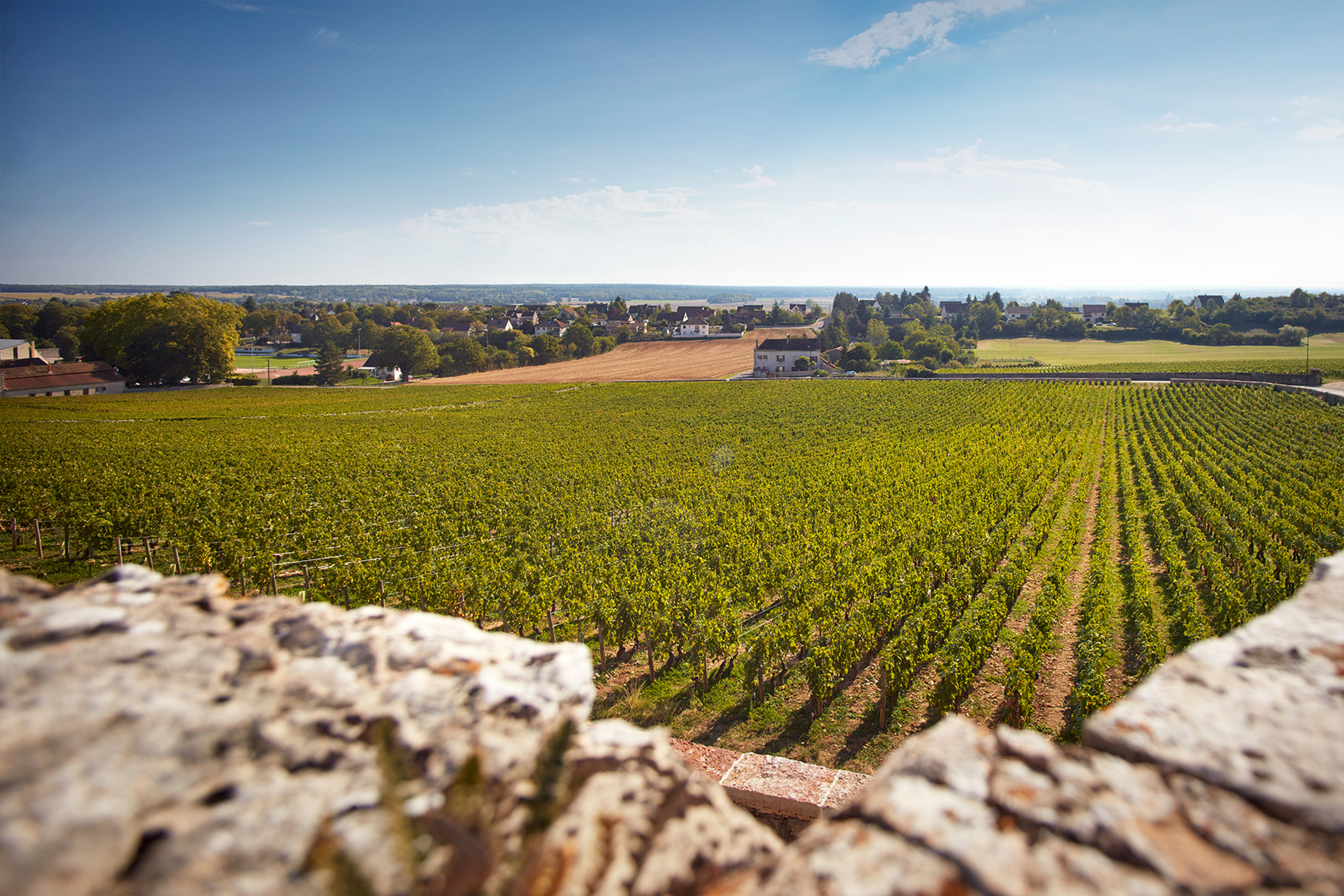
The monopole "Clos de La Bressande" covers 2.60 hectares of vines in a walled vineyard (clos) at the foot of the château.
Here, Chardonnay flourishes on clay-limestone soils that highlight its freshness and fruity aromas. The vines of the Clos enjoy an ideal exposure: the south-east orientation allows them to capture maximum light and optimum sunshine, thus promoting good grape ripeness and, as a result, a fine balance between sugar and acidity.
The Premier Cru name "La Bressande" has been given both to the estate and this monopole vineyard. It could mean "the land facing the Bresse" or the land belonging to or grown by an inhabitant of the Bresse, the area facing the estate vineyards in the Saône valley.
Vinification and maturing
The Monopole Clos La Bressande parcel was hand-harvested over two days, on September 27 and 28. Following pneumatic pressing, the must underwent 12 to 24 hours of cold settling to remove coarse lees. Alcoholic fermentation took place in temperature-controlled stainless steel tanks, ensuring precise temperature control and a homogeneous cuvée, before transfer to barrel at the end of fermentation. The wine was aged for 8 months on fine lees in mainly 228-litre barrels and a small proportion of 500-litre demi-muids (25% new oak). Bâtonnage was carried out twice a month until malolactic fermentation (early January) to enhance aromatic complexity while preserving fruit purity and protecting against oxidation and reduction.
Vintage : 2021
Nature certainly set a challenge for the winegrower and the winemaker with this vintage.
It began with very warm temperatures at the end of February which led to an early bud break.
The historic frost in April then destroyed young shoots that had emerged too early, significantly affecting the future harvest. Changing weather continued to characterize the vintage through to the harvests.
There were spells of rain from May to mid-August, obliging winegrowers to be constantly on the alert. The only periods of relative calm were during flowering, which took place in good conditions for the formation of the future fruit, and the véraison (colour change), which benefited from the return of the sun from mid-August.
The vagaries of the weather contributed to the development of outbreaks of disease, which were contained thanks to the tireless efforts of our winegrowers. In spite of this, considerable sacrifices had to be made to ensure a high level of quality, and rigorous sorting of the fruit in the vineyard and on arrival at the winery was necessary.
This vintage also required a major technical effort. The vinifications had to be carried out with meticulous attention and precision with a particular care over the extraction of colouring matter, the balance of the structure and the aromatic expression of the red wines, and of the freshness, balance of acidity and aromatic potential of the white wines.
Awards
JamesSuckling.com - 90 points - February 2024