RULLY PREMIER CRU
MOLESME 2024
VIGNES DU CHÂTEAU DE RULLY
Grape Variety
Chardonnay.
Tasting notes
Colour: Gold
Nose: Floral bouquet with a touch of oak, evoking toasted bread.
Palate: A mineral wine with floral notes and a generous, well-integrated oak. Beautiful complexity and long aromatic persistence on the finish.
Food and wine pairing
Excellent with cold cuts, delicate fish, seafood, warm starters, or white meats with sauce. Best enjoyed with aged cheeses, such as certain goat cheeses.
Serving suggestions
Ideally served between 12°C and 14°C (54–57°F).
Ageing potential
Can be easily cellared for up to 5 years after the vintage.
Origin
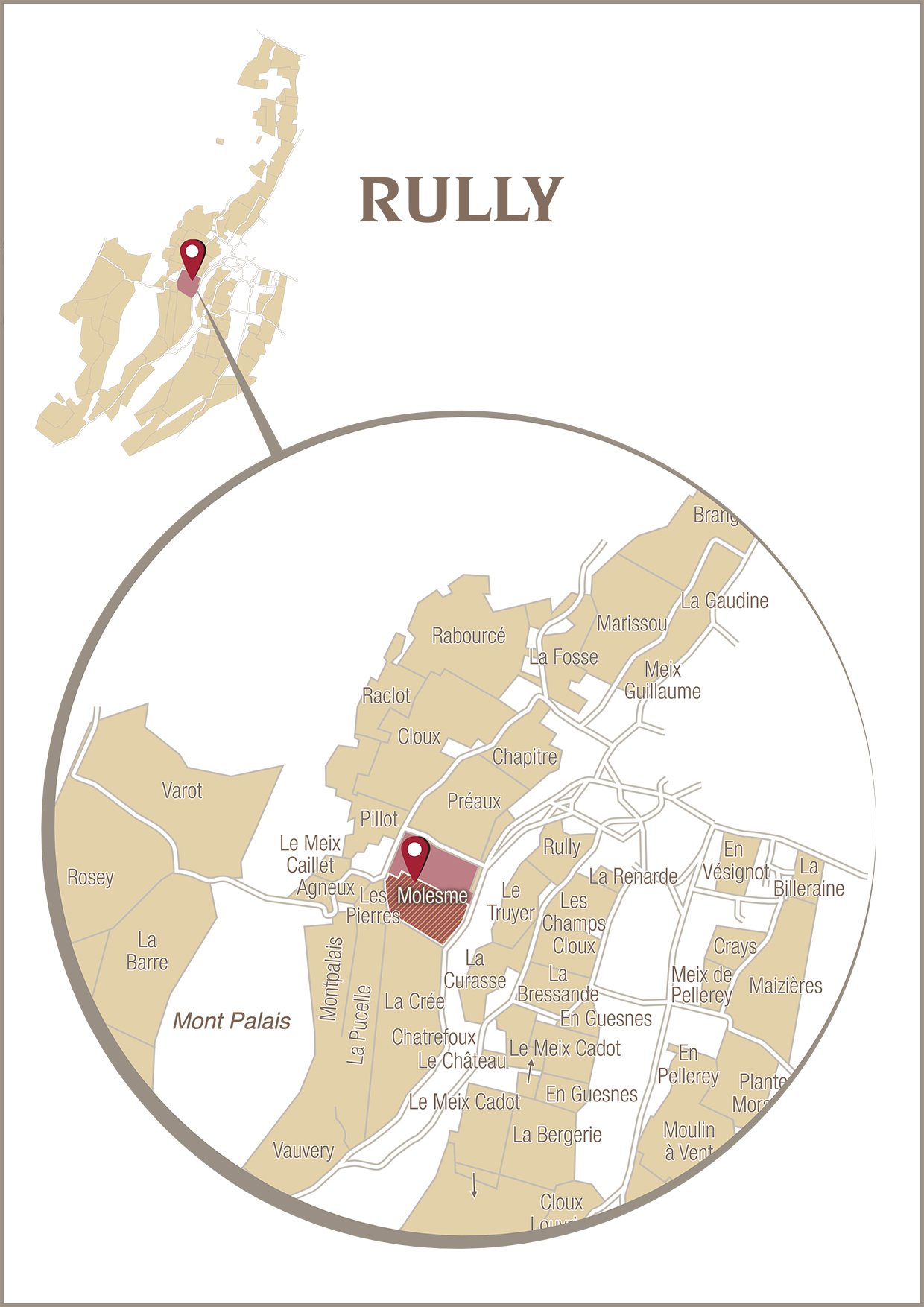
Rully is one of the renowned villages of the Côte Chalonnaise, south of Burgundy. It is a village appellation comprising 23 climats classified as Premier Cru.
White Rully wines cover 261 hectares, including 68 hectares of Premier Cru, while red Rully wines are produced on 116 hectares, of which 28 hectares are Premier Cru.
Rully takes its name from a wealthy Roman, Rubilius, who built a villa and founded the village during the Roman occupation. Originally called Rubiliacum, the name evolved over time to become Rully.
Terroir
The Château de Rully, a former 12th-century fortress, has become the iconic landmark of the village of Rully. Its vineyard is entirely and exclusively managed by Domaine de la Bressande.
The Molesme parcel covers half a hectare of Chardonnay vines, south-facing on a gently sloping hillside.
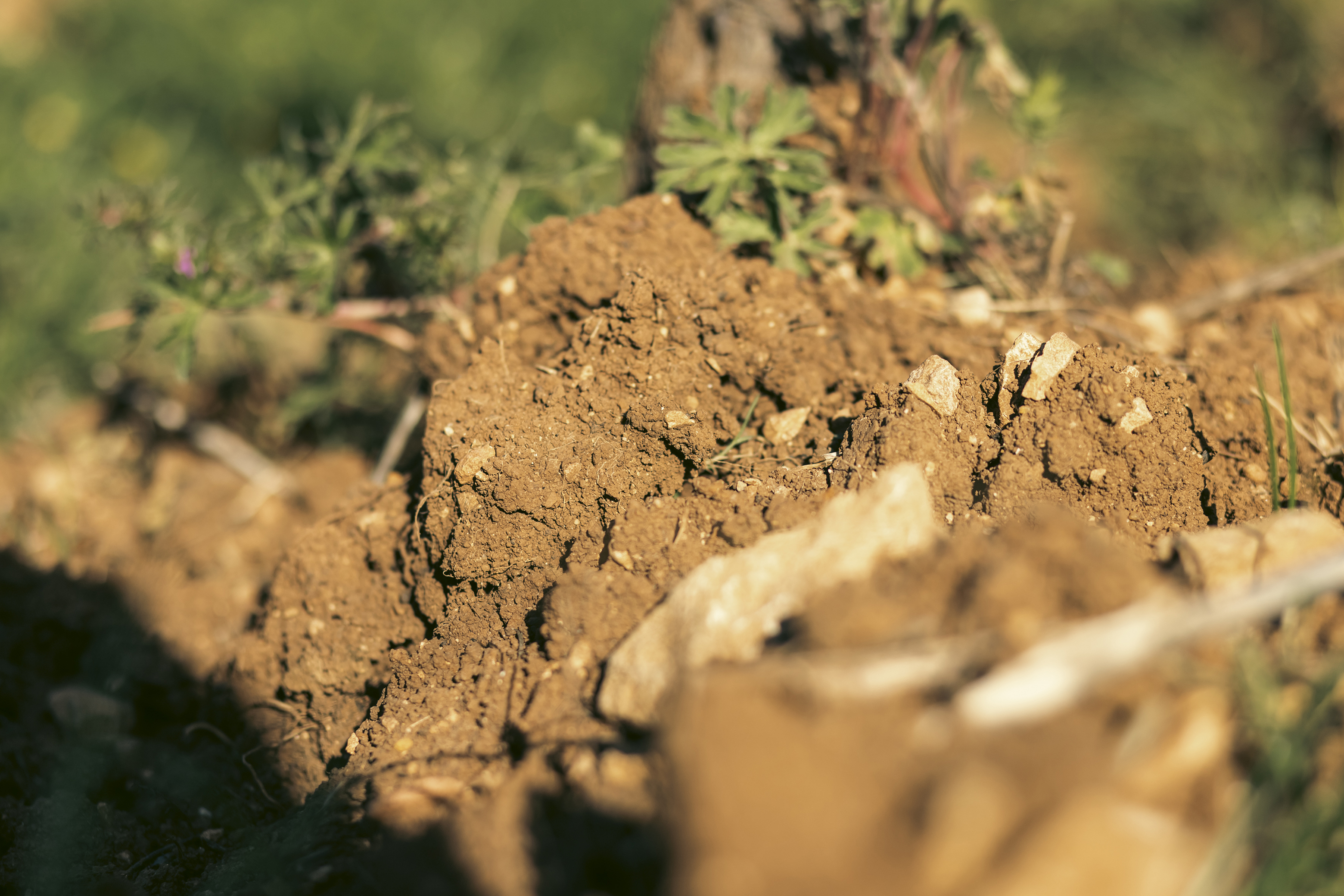
This terroir is located just above an underground river. The vines suffer less from drought thanks to a reddish-brown calcareous soil that retains water, with loam at the bottom of the slope.
The subsoil consists of an Oxfordian substrate of lithographic and oolitic limestone, producing rich, rounded, and mineral white wines.
Vinification and maturing
Harvest of Chardonnay from the Premier Cru Molesme plot on September 20, 2024, with sorting both in the vineyard and at the winery.
Pneumatic pressing followed by a 48-hour cold settling to remove coarse lees. Alcoholic fermentation in temperature-controlled stainless steel tanks for precise control and blend uniformity, followed by racking into barrels at the end of fermentation.
Aging 100% in 228L barrels (30% new) on fine lees for 9 months, with monthly bâtonnage until the end of alcoholic fermentation to develop aromas, preserve fruit purity, and protect the wine from oxidation and reduction.
Vintage : 2024
The year 2024 in Burgundy was marked by extreme weather conditions, with excessive rainfall and a significant lack of sunshine. These factors led to heavy disease pressure, particularly downy mildew, complicating the work of the winegrowers. Frost and hail also caused significant damage, particularly in regions such as Chablis and Auxerrois.
Yields were severely affected, with drops of up to 70% in some areas. The Côte Chalonnaise held up better, with more limited losses. Overall, volumes are well below the usual average, a reminder of the difficult harvests in 2021.
The late harvest necessitated rigorous sorting to preserve quality. Despite the challenges, the grapes harvested reached good ripeness thanks to a sunny spell in September. The reds stand out for their richness and concentration, comparable to great vintages such as 2010. The elegant whites are reminiscent of 2022.
Initial tastings reveal promising wines, with concentrated aromas and a fine structure. Although limited in quantity, this vintage promises to be a qualitative success.
Awards
International Wine & Spirit Competition - 90 pts - Silver Medal - May 2026