RULLY PREMIER CRU
MOLESME 2023
VIGNES DU CHÂTEAU DE RULLY
Grape Variety
Chardonnay.
Tasting notes
Colour: Beautiful pale golden yellow.
Bouquet: Charming nose, fruity with lovely toasted notes.
Palate: Charming again, with length and excellent balance.
Food and wine pairing
Excellent with cold cuts, delicate fish, seafood, warm starters, or white meats with sauce. Best enjoyed with aged cheeses, such as certain goat cheeses.
Serving suggestions
Ideally served between 12°C and 14°C (54–57°F).
Ageing potential
Can be easily cellared for up to 5 years after the vintage.
Origin
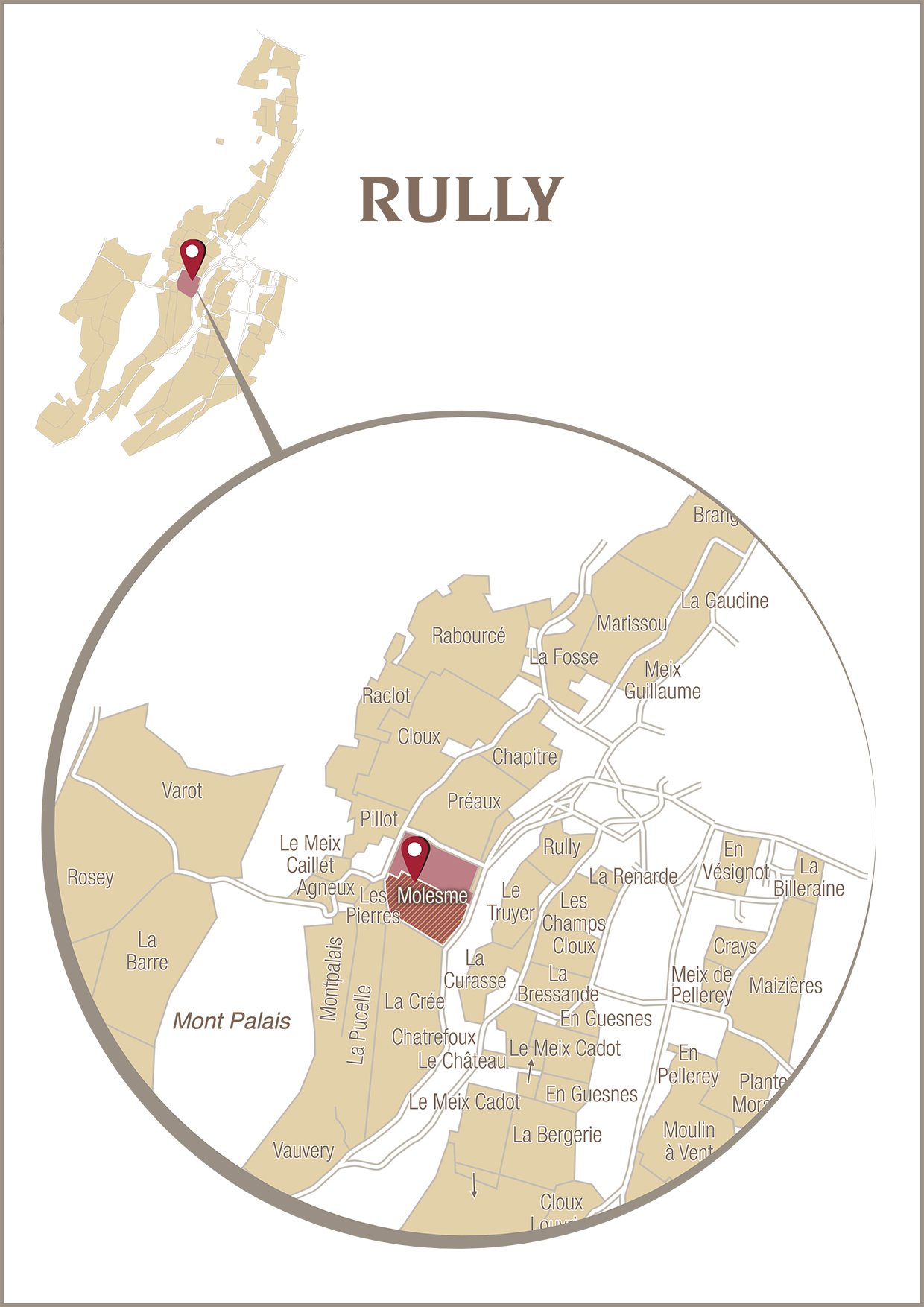
Rully is one of the renowned villages of the Côte Chalonnaise, south of Burgundy. It is a village appellation comprising 23 climats classified as Premier Cru.
White Rully wines cover 261 hectares, including 68 hectares of Premier Cru, while red Rully wines are produced on 116 hectares, of which 28 hectares are Premier Cru.
Rully takes its name from a wealthy Roman, Rubilius, who built a villa and founded the village during the Roman occupation. Originally called Rubiliacum, the name evolved over time to become Rully.
Terroir
The Château de Rully, a former 12th-century fortress, has become the iconic landmark of the village of Rully. Its vineyard is entirely and exclusively managed by Domaine de la Bressande.
The Molesme parcel covers half a hectare of Chardonnay vines, south-facing on a gently sloping hillside.
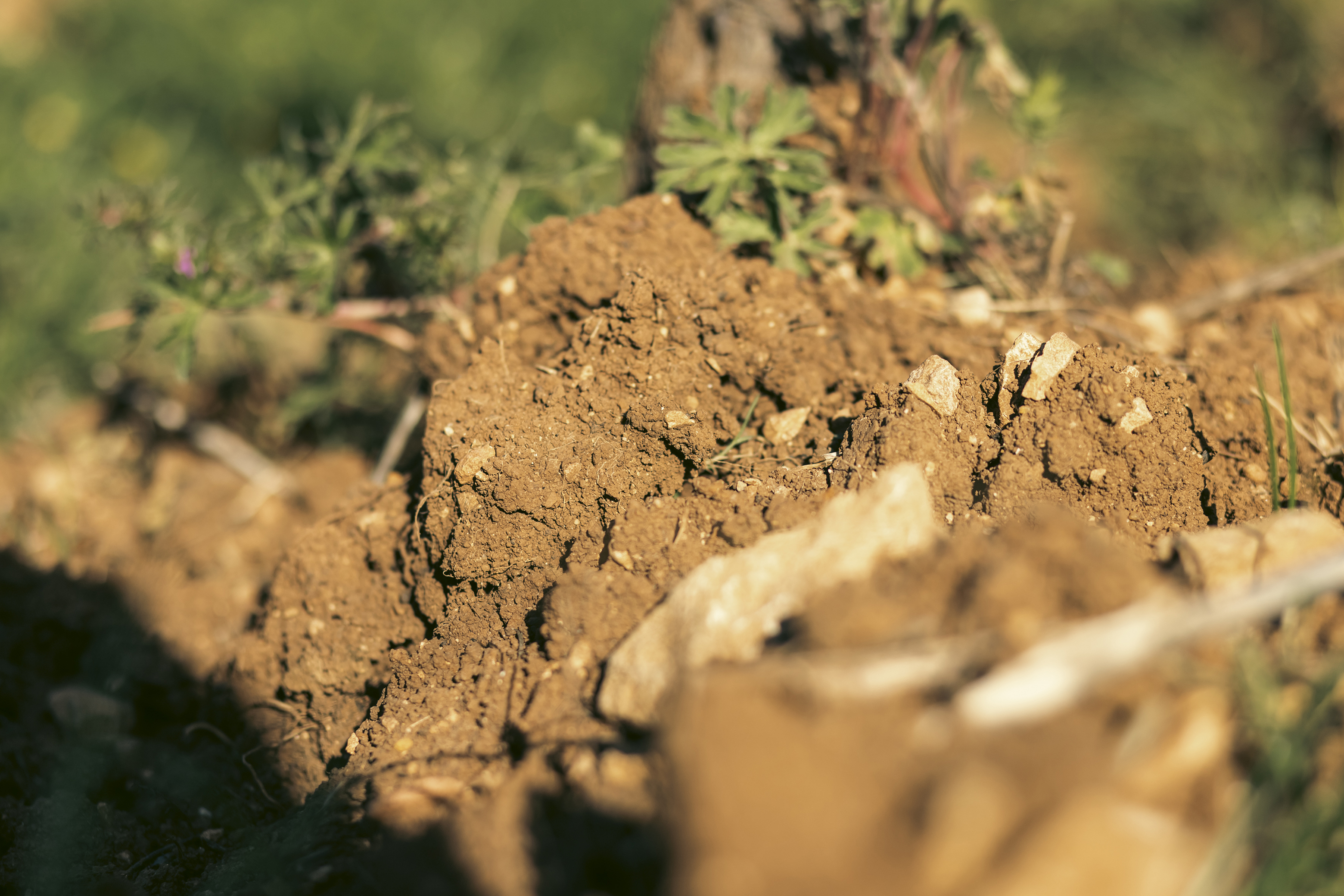
This terroir is located just above an underground river. The vines suffer less from drought thanks to a reddish-brown calcareous soil that retains water, with loam at the bottom of the slope.
The subsoil consists of an Oxfordian substrate of lithographic and oolitic limestone, producing rich, rounded, and mineral white wines.
Vinification and maturing
The Chardonnay grapes from our Molesme plot were hand-harvested on September 20, 2024. After pneumatic pressing, the musts were cold-settled at 12 °C for 24 hours, with free-run and press juices kept separate to obtain a perfectly clear must. Alcoholic fermentation began in temperature-controlled stainless steel tanks, allowing precise regulation of temperature (between 13 and 18 °C max.) and ensuring perfect homogeneity of the blend. The barrels were filled during the fermentation process. The wine was aged on fine lees for 8 months, mainly in 228 L barrels (25% new) and a few 500 L demi-muids, with bâtonnage – a gentle stirring of the wine without scraping the wood – once a week until malolactic fermentation, to nourish the wine and develop complex aromas.
Vintage : 2023
The ideal weather conditions in Burgundy in 2023, characterised by a favourable spring, a hot summer with cool nights, moderate rainfall and an early autumn harvest, played a key role in the high yields and exceptional quality of the grapes at harvest time.
The white wines are distinguished by their elegance, complexity and liveliness. Subtle aromas of white fruit, citrus and floral notes add to their remarkable freshness.
The red wines are powerful and well-balanced, with aromas of red and black fruit, as well as spicy and mineral nuances. The silky tannins add an elegant structure, promising harmonious ageing.
In short, these are expressive, fruity wines with very fine aromatic profiles.
Awards
Bourgogne Aujourd'hui Magazine - 15 / 20 - August 2024