RULLY PREMIER CRU
MOLESME 2024
Grape Variety
Pinot Noir.
Tasting notes
Colour: Garnet-red.
Nose: The bouquet shows cherry et spices aromas carried by toasted and woody notes.
Palate: A very nice expression of the Pinot Noir finesse with cherry aromas again but also white pepper and tobacco notes.
Food and wine pairing
A great companion to noble red meats, small game such as quails or pheasant, grilled or roasted beef, but also poultry in sauce or fine creamy and fresh cheeses.
Serving suggestions
Serve ideally at a temperature of 15-16° C. (59-61°F.).
Ageing potential
3 to 6 years.
Origin
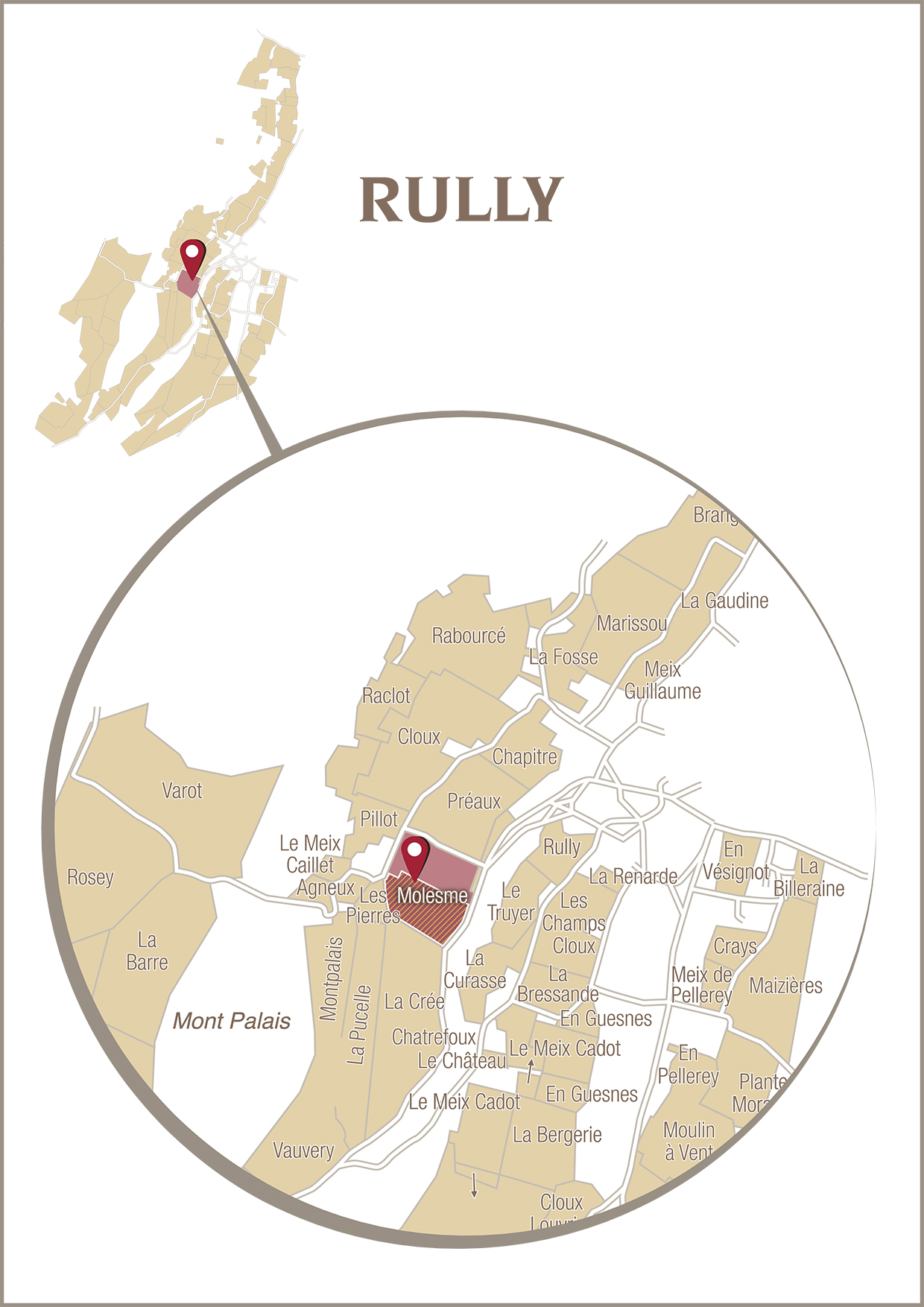
Rully is a communal appellation made up of 23 Premiers Crus climats. White Rullys spread on a 261 ha area - including 68 ha of Premiers Crus - whereas red Rullys are produced on a 116 ha area of which 28 are Premiers Crus.
Rully was named after a rich roman, Rubilius, who built a villa and founded the village during the roman occupation. It was at first named Rubiliacum and it evolved through the years to become the current Rully.
Terroir
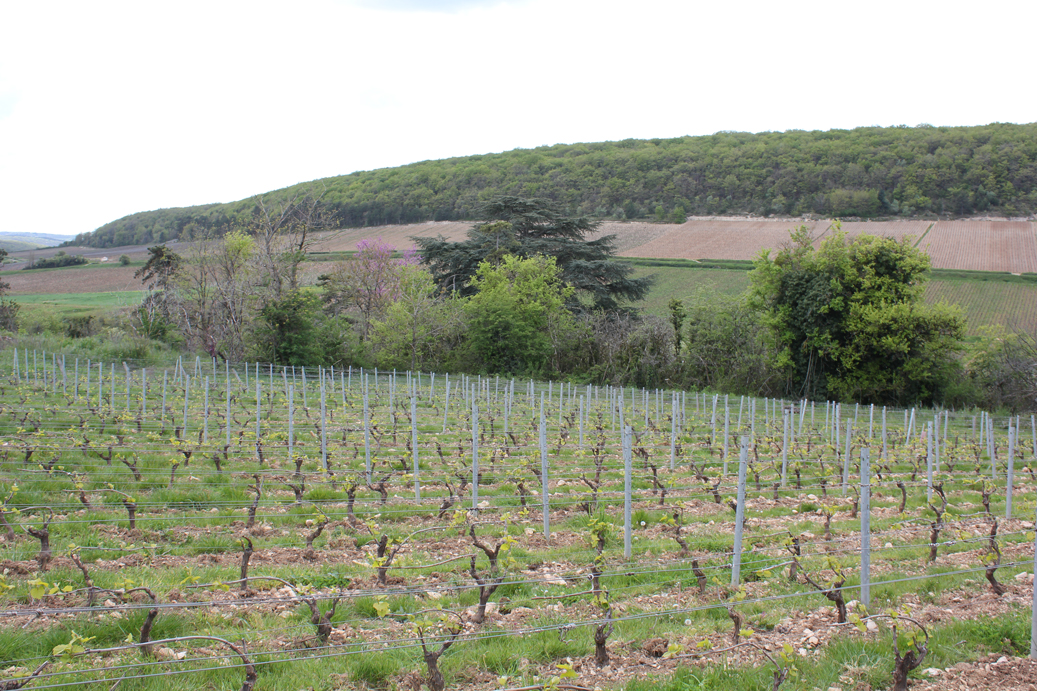
The plot Molesme covers around 3 hectares of Pinot Noir vines facing east-south-east, with a flatter piedmont topography.
A plot with very generous soil that is not affected by drought. The subsoil is composed of an Oxfordian substratum of lithographic and oolitic limestone giving wines with an assertive character.
Vinification and maturing
Grapes were handpicked and carefully sorted, then carried in 16 kg boxes to protect them from crush and compaction.
After being sorted again on the table at their arrival at the winery, the grapes were placed in vats for maceration during 14 to 16 days. Then a cold pre-fermentation stage came for 24 hours and the start of the vinification for around 10 to 14 days.
The vinification continued in thermo-regulated concrete vats with daily pumping over and very few pigeages (cap punching placed at the beginning of fermentation).
Then, the wine was aged for 8 months in oak barrels with 25% new oak.
Light filtration before bottling.
Vintage : 2024
The year 2024 in Burgundy was marked by extreme weather conditions, with excessive rainfall and a significant lack of sunshine. These factors led to heavy disease pressure, particularly downy mildew, complicating the work of the winegrowers. Frost and hail also caused significant damage, particularly in regions such as Chablis and Auxerrois.
Yields were severely affected, with drops of up to 70% in some areas. The Côte Chalonnaise held up better, with more limited losses. Overall, volumes are well below the usual average, a reminder of the difficult harvests in 2021.
The late harvest necessitated rigorous sorting to preserve quality. Despite the challenges, the grapes harvested reached good ripeness thanks to a sunny spell in September. The reds stand out for their richness and concentration, comparable to great vintages such as 2010. The elegant whites are reminiscent of 2022.
Initial tastings reveal promising wines, with concentrated aromas and a fine structure. Although limited in quantity, this vintage promises to be a qualitative success.