RULLY PREMIER CRU
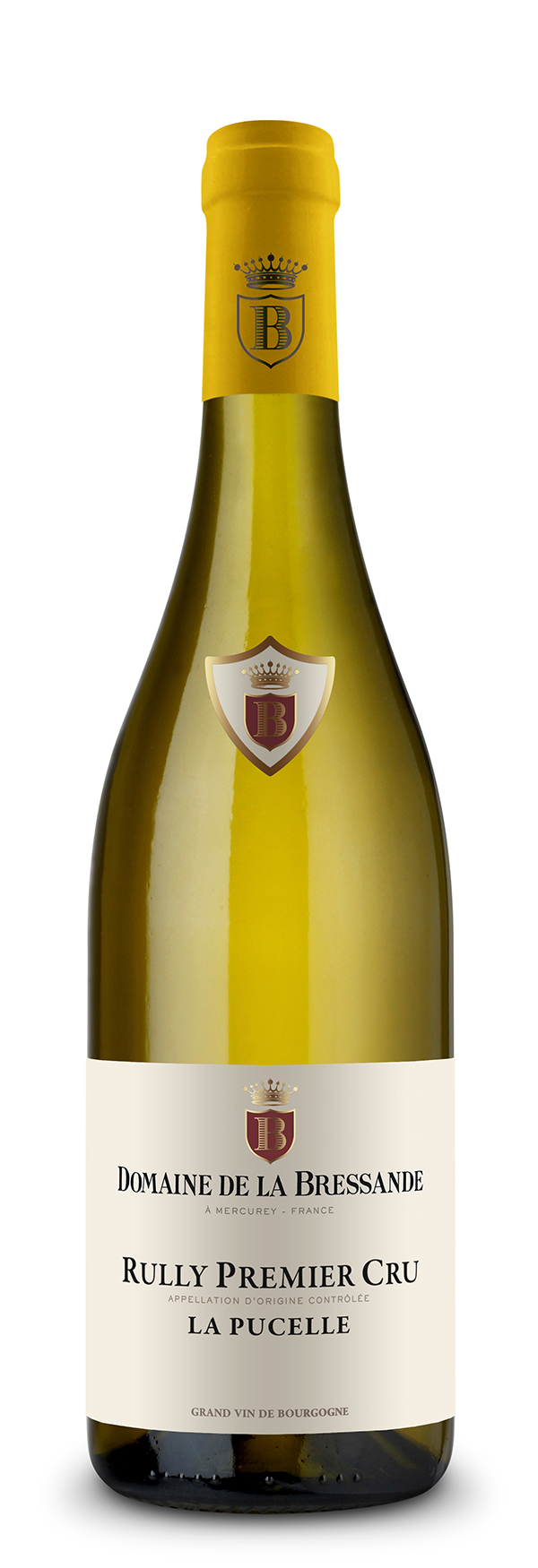
LA PUCELLE 2023
Grape Variety
Chardonnay.
Tasting notes
Colour: Pale gold.
Nose: A fine, delicate citrus nose.
Palate: A fine, well-balanced woodiness enhanced by citrus notes. Tension and finesse on the palate with a long, delicate finish.
Food and wine pairing
Ideal with cold starters and hot starters (quiches, hot tarts, etc.), as well as seafood, fine fish, white meats with a light sauce, poultry in sauce and mature cheeses.
Serving suggestions
Ideally served at a temperature of 12° to 14°C. (54-57°F.).
Ageing potential
It will keep for 5 to 7 years in the cellar.
Origin
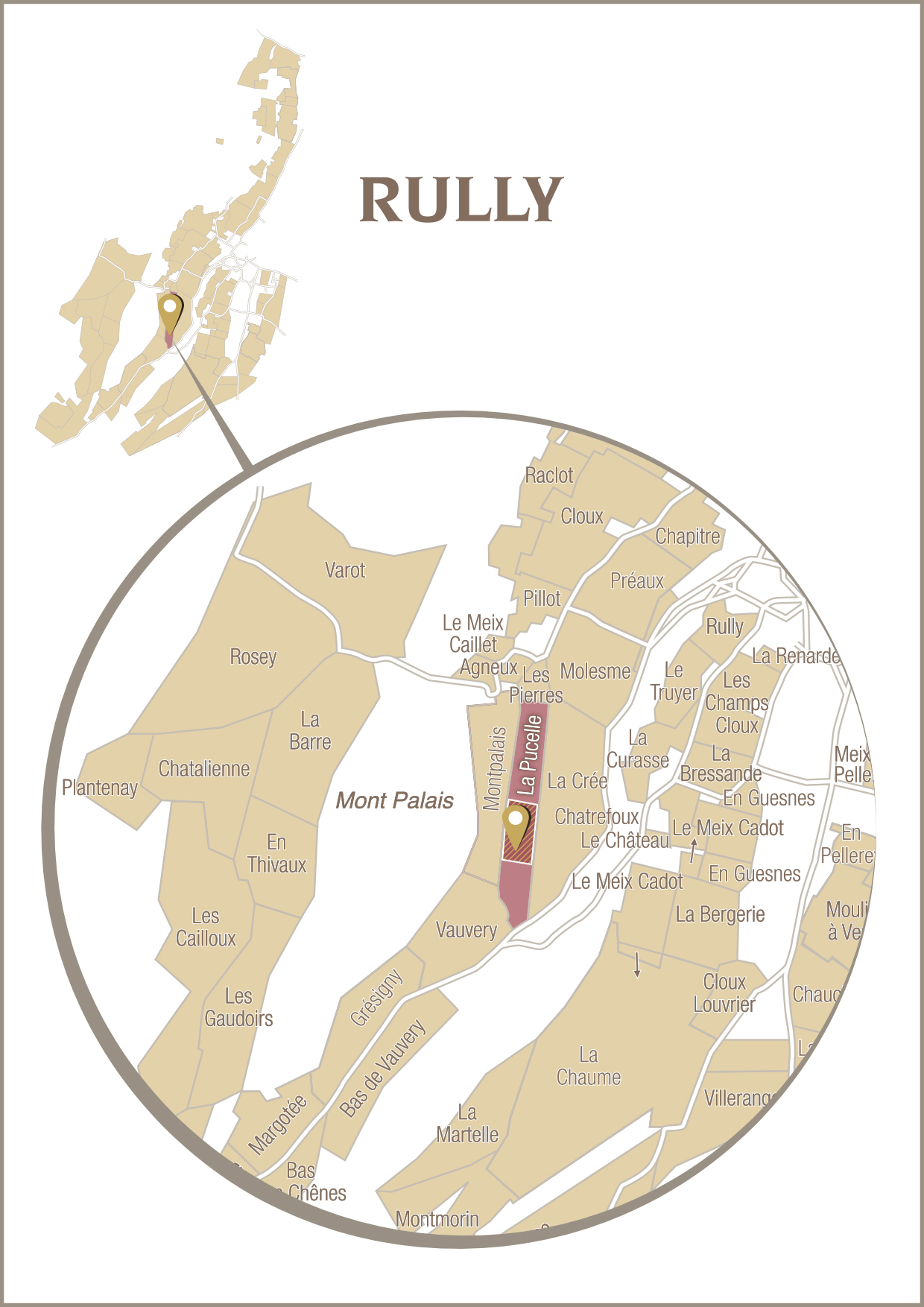
Rully is one of the famous village of the Côte Chalonnaise, in the South of Burgundy. A communal appellation made up of 23 Premiers Crus climats. White Rullys spread on a 261 ha area - including 68 ha of Premiers Crus - whereas red Rullys are produced on a 116 ha area of which 28 are Premiers Crus.
Rully was named after a rich roman, Rubilius, who built a villa and founded the village during the roman occupation. It was at first named Rubiliacum and it evolved through the years to become the current Rully.
Terroir
The Domaine’s Rully Premier Cru La Pucelle covers an area of 1.5 hectares.
The Chardonnay vines are around forty years old and are grown on a terroir of brown limestone soils, very stony, with some clay colluvial deposits.
The origin of the name dates back to the Middle Ages. According to the story, the Lord of Rully divided his lands and gave the finest parcel to his youngest daughter. La Pucelle derives from the Latin adjective “Pulcella,” meaning “pretty,” “beautiful,” or “charming.”
Vinification and maturing
The grapes are harvested by hand and transported in crates weighing around 16 kilos.
Pneumatic pressing is followed by cold settling between 16 and 24 hours, the aim being to eliminate the coarse bourbes (solid particles from the skin, stalks, skins and impurities that settle by sedimentation). Alcoholic fermentation is carried out in temperature-controlled stainless steel vats to ensure precise temperature control and homogeneity of the cuvée before racking at the end of fermentation.
Ageing continues in 228-litre barrels on fine lees for 9 months (25% of which were new), with occasional stirring of the lees (around twice a month) until malolactic fermentation, to develop complex aromas and retain the purity of the fruit, and to protect the wine from oxidation and reduction by re-suspending the fine lees.
Vintage : 2023
The ideal weather conditions in Burgundy in 2023, characterised by a favourable spring, a hot summer with cool nights, moderate rainfall and an early autumn harvest, played a key role in the high yields and exceptional quality of the grapes at harvest time.
The white wines are distinguished by their elegance, complexity and liveliness. Subtle aromas of white fruit, citrus and floral notes add to their remarkable freshness.
The red wines are powerful and well-balanced, with aromas of red and black fruit, as well as spicy and mineral nuances. The silky tannins add an elegant structure, promising harmonious ageing.
In short, these are expressive, fruity wines with very fine aromatic profiles.
Awards
La Sélection Bettane + Desseauve - 90 points - April 2026