RULLY PREMIER CRU
LA BRESSANDE 2024
CLOS DE LA BRESSANDE MONOPOLE
VIGNES DU CHÂTEAU DE RULLY
Grape Variety
Chardonnay.
Tasting notes
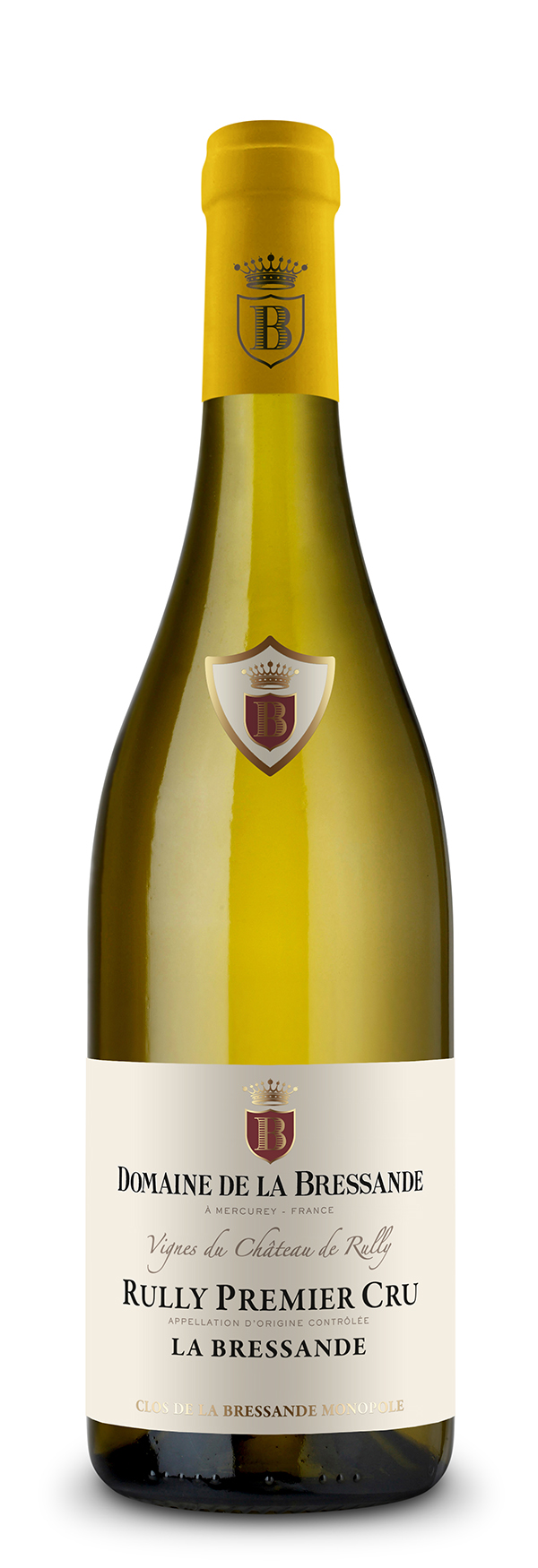
Colour: Beautiful golden hue.
Nose: Very expressive, with honeyed and toasty notes.
Palate: A powerful and generous wine, driven by toasty oak and followed by a very long finish.
Food and wine pairing
Enjoy ideally with cold cuts, seafood (shellfish, crustaceans), hot first courses, fine fish or white meats in sauces. It can also beautifully enhance fine, dry or goat cheeses.
Serving suggestions
Serve between 12-14° C. (54-57°F.).
Ageing potential
This great wine will perfectly age for 5 years in good conditions.
Origin
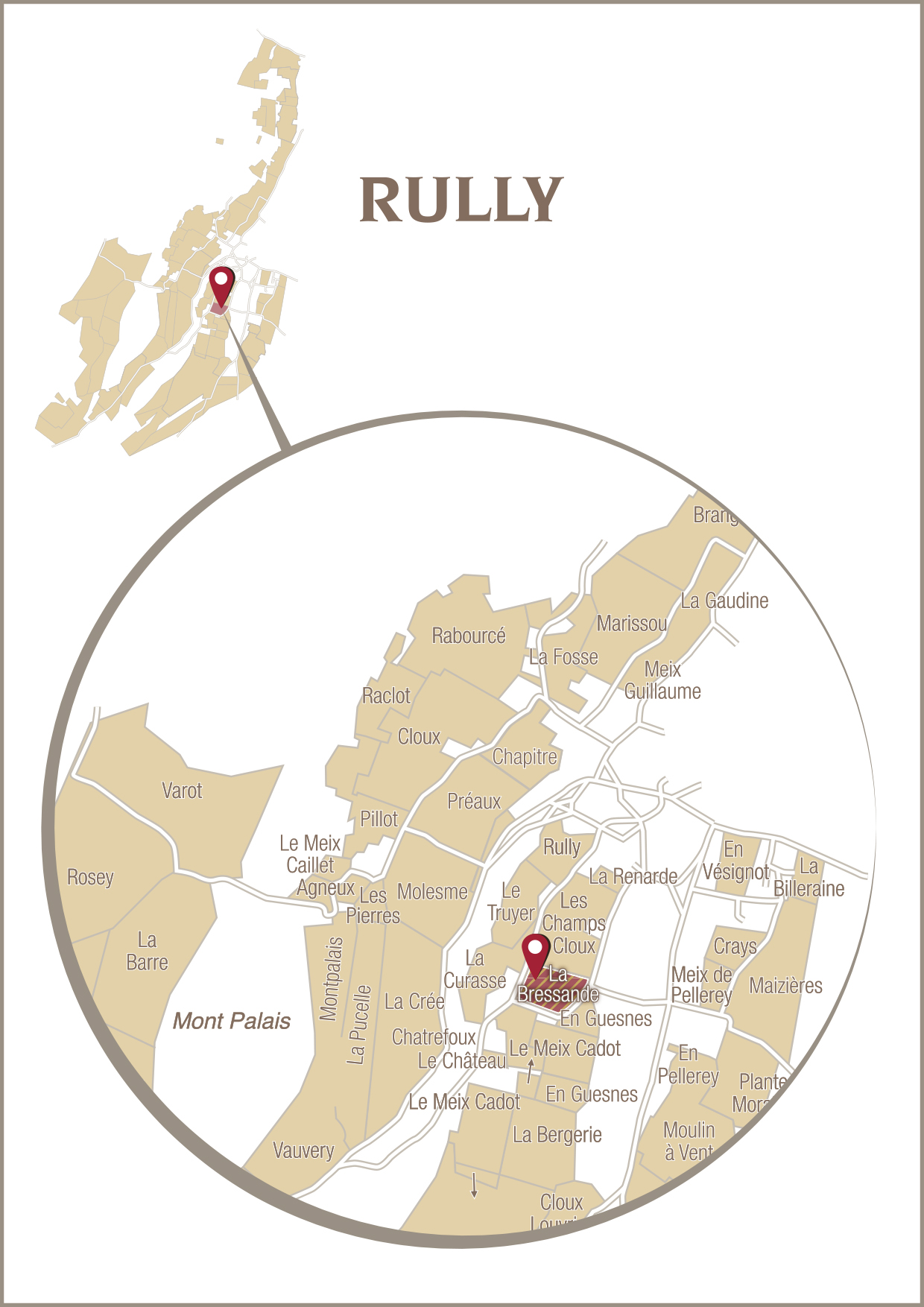
Rully is one of the famous village of the Côte Chalonnaise, in the South of Burgundy. A communal appellation made up of 23 Premiers Crus climats. White Rullys spread on a 261 ha area - including 68 ha of Premiers Crus - whereas red Rullys are produced on a 116 ha area of which 28 are Premiers Crus.
Terroir
Vignes du Château de Rully
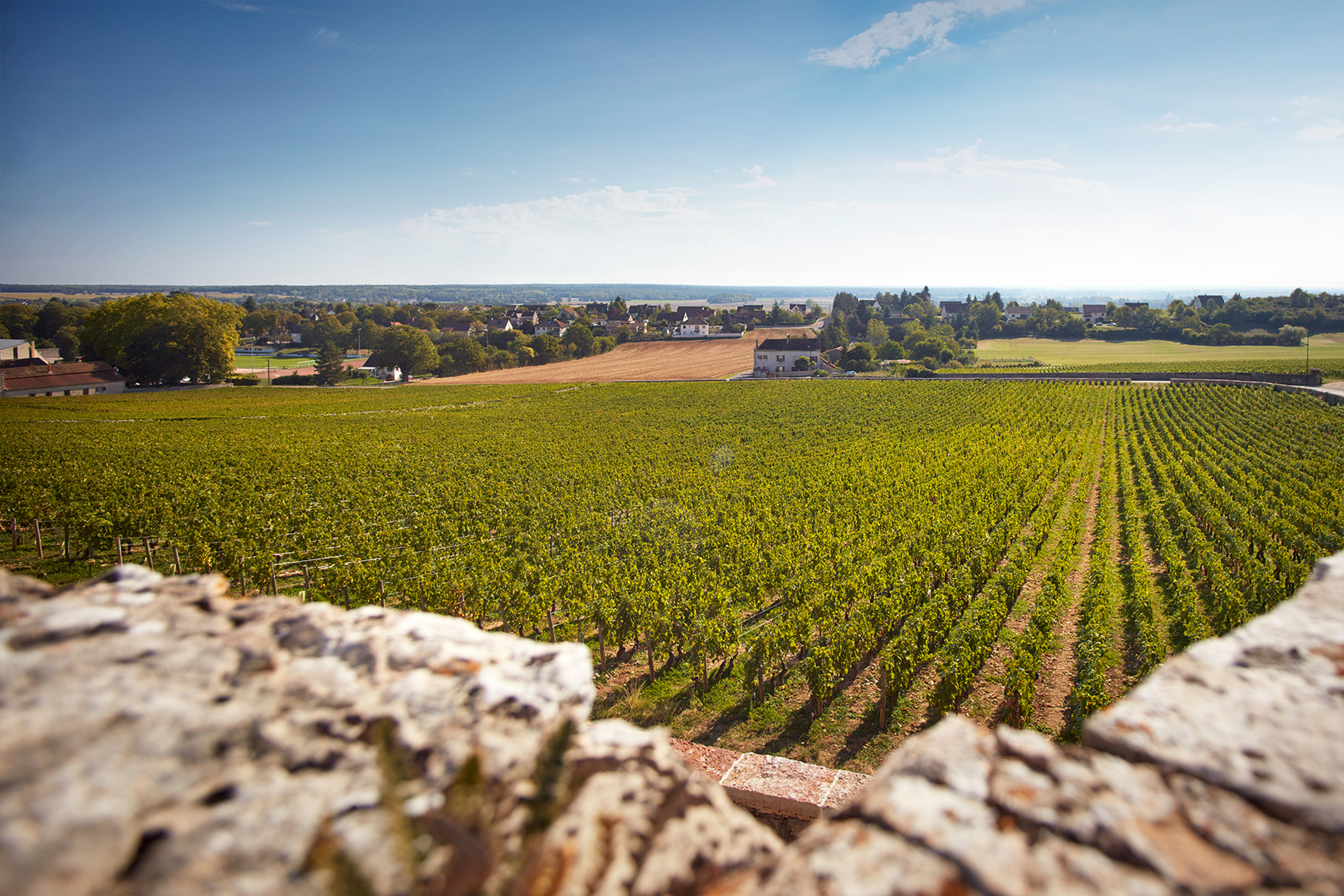
Rully Castle is a former 12th-century fortress that has become the emblem of the village of Rully. The estate vineyard is fully and exclusively farmed by Domaine de la Bressande.
The monopole "Clos de La Bressande" covers 2.60 hectares of vines in a walled vineyard (clos) at the foot of the château.
Here, Chardonnay flourishes on clay-limestone soils that highlight its freshness and fruity aromas. The vines of the Clos enjoy an ideal exposure: the south-east orientation allows them to capture maximum light and optimum sunshine, thus promoting good grape ripeness and, as a result, a fine balance between sugar and acidity.
The Premier Cru name "La Bressande" has been given both to the estate and this monopole vineyard. It could mean "the land facing the Bresse" or the land belonging to or grown by an inhabitant of the Bresse, the area facing the estate vineyards in the Saône valley.
Vinification and maturing
The Clos de la Bressande plot was harvested on September 2024, the 20th. Pneumatic pressing was followed by cold settling at 12°C for 24 hours, with free-run and press juices kept separate to obtain a perfectly clarified must. Alcoholic fermentation started in temperature-controlled stainless-steel tanks, allowing precise regulation of the temperature (maintained between 13 and 18°C maximum) and ensuring perfect homogeneity of the cuvée. Barrels were filled during the fermentation process. The wine was then aged on fine lees for 8 months, mainly in 228-litre barrels (with a few 5 hl demi-muids) with "bâtonnage" = a gently stirring the wine without scraping the wood, once a week until the malolactic fermentation, in order to nourish the wine and develop complex aromas.
Vintage : 2024
The year 2024 in Burgundy was marked by extreme weather conditions, with excessive rainfall and a significant lack of sunshine. These factors led to heavy disease pressure, particularly downy mildew, complicating the work of the winegrowers. Frost and hail also caused significant damage, particularly in regions such as Chablis and Auxerrois.
Yields were severely affected, with drops of up to 70% in some areas. The Côte Chalonnaise held up better, with more limited losses. Overall, volumes are well below the usual average, a reminder of the difficult harvests in 2021.
The late harvest necessitated rigorous sorting to preserve quality. Despite the challenges, the grapes harvested reached good ripeness thanks to a sunny spell in September. The reds stand out for their richness and concentration, comparable to great vintages such as 2010. The elegant whites are reminiscent of 2022.
Initial tastings reveal promising wines, with concentrated aromas and a fine structure. Although limited in quantity, this vintage promises to be a qualitative success.
Awards
INTERNATIONAL WINE CHALLENGE - 94 pts - Silver Medal - May 2026