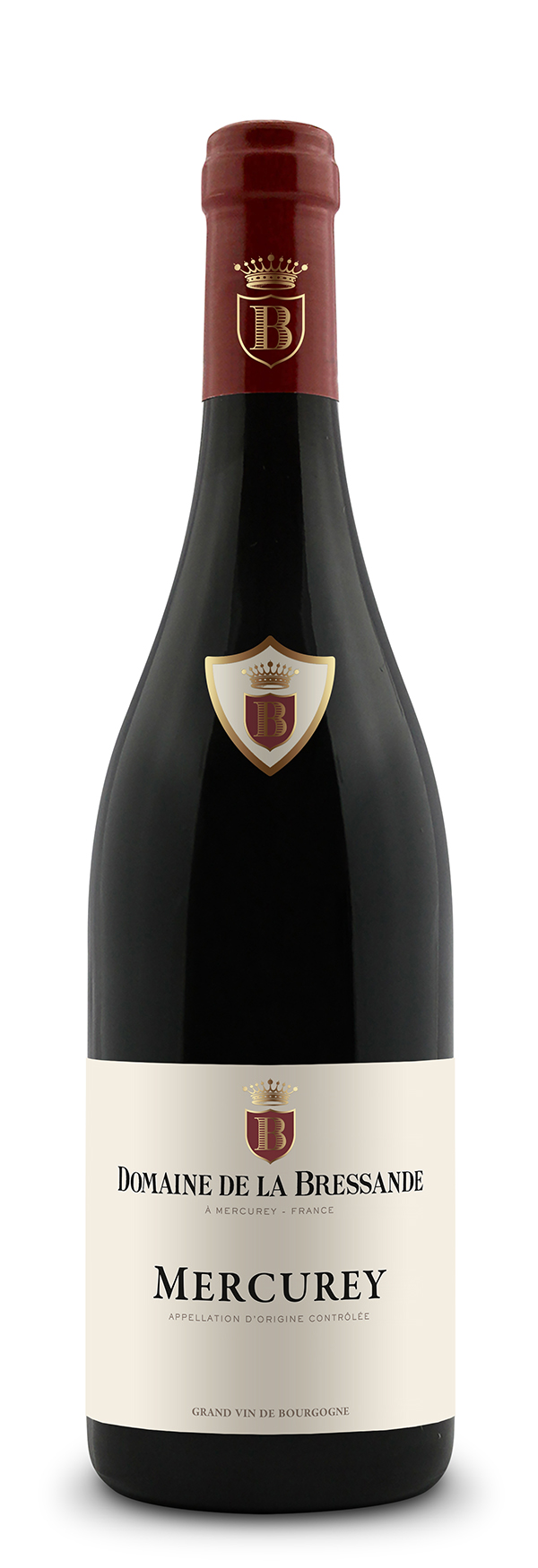
MERCUREY 2024
Grape Variety
Pinot Noir.
Tasting notes
Colour: Elegant ruby red.
Nose: Well-balanced, on red fruits.
Palate: A wine full of fruit and deliciousness, carried by supple and melted tannins.
Food and wine pairing
Will be the perfect companion to roasted or grilled meats, light game in sauce and most cheeses.
Serving suggestions
Serve at around 16°C (61°F).
Ageing potential
4 to 5 years.
Origin
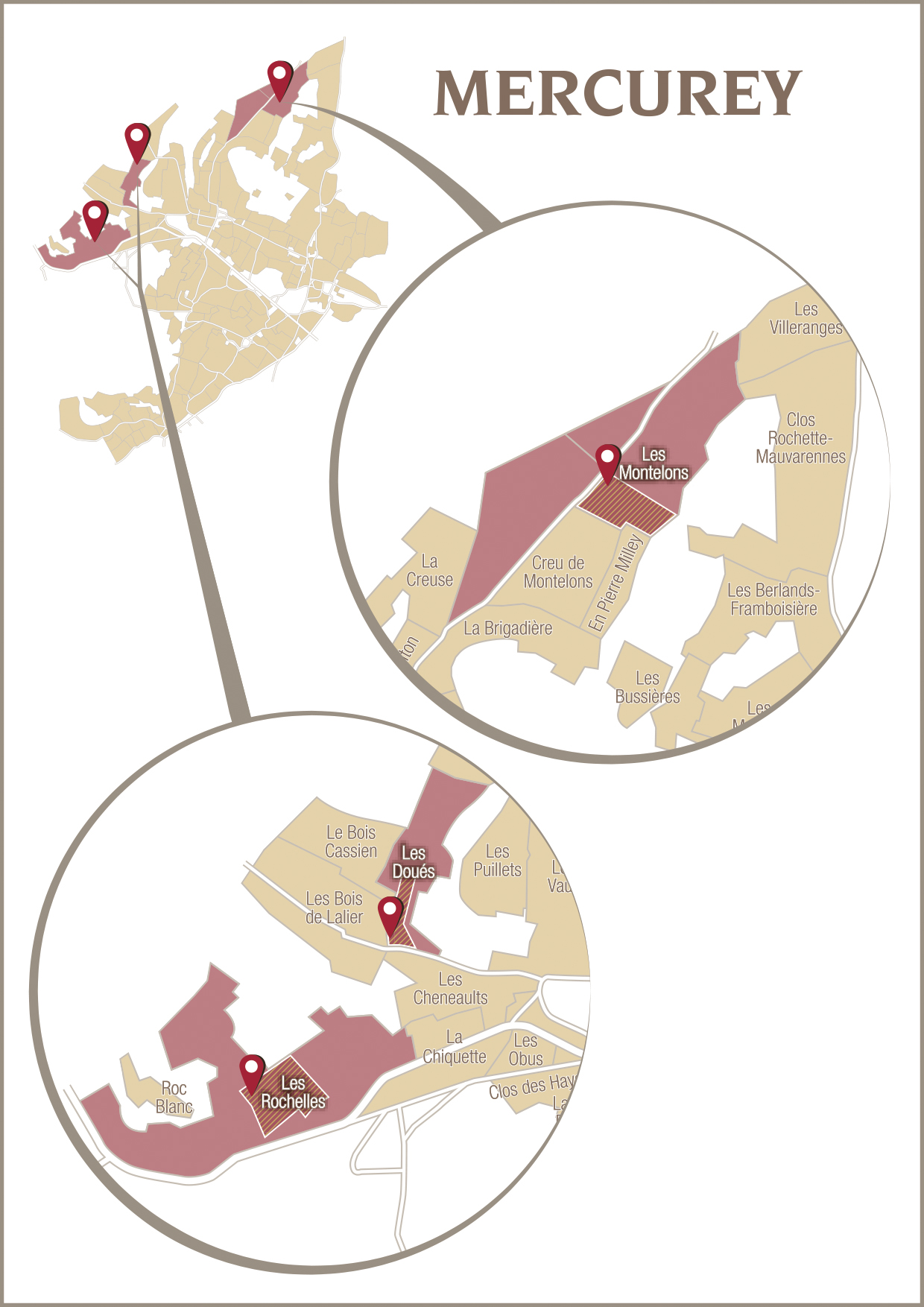
In 1923, the civil court of Chalon-sur-Saône instituted, by judgment, the appellation d’origine mercurey, allowing it to become one of the three oldest appellations of Burgundy.
In the Côte Chalonnaise, Mercurey has always enjoyed an excellent reputation.
This communal appellation includes 32 Climats classified as Premiers Crus. Located to the north of the Côte Chalonnaise, more than 90% of the wine produced under the Mercurey name is red. A total of 543 hectares, of which 148 are Premiers Crus. As for the white wines, they represent 106 hectares, including 18 classified as Premiers Crus.
The village of Mercurey owes its name to the Romans who, during the occupation of the region, built a temple in homage to Mercury, God of commerce and finance.
The vineyard estate extends now over 21 hectares and offers 3 upper quality wines from the appellation of Mercurey. White wines: Mercurey (3 ha), red wines: Mercurey (7.50 ha) and Mercurey 1er Cru En Sazenay (1.75 ha).
Terroir
- Vineyard area : 7,50 ha
- Vines age : 30 ans
- Soil : sol argilo-calcaire
Vinification and maturing
Hand-harvested grapes. The grapes are 100% destemmed.
The vatting period lasts 14 to 20 days. Maceration and fermentation take place under temperature-controlled conditions. Punch-downs are carried out twice a day during alcoholic fermentation. Malolactic fermentation is completed in full.
Aged 100% in oak barrels, including 20% new oak, for approximately 12 months.
Vintage : 2024
The year 2024 in Burgundy was marked by extreme weather conditions, with excessive rainfall and a significant lack of sunshine. These factors led to heavy disease pressure, particularly downy mildew, complicating the work of the winegrowers. Frost and hail also caused significant damage, particularly in regions such as Chablis and Auxerrois.
Yields were severely affected, with drops of up to 70% in some areas. The Côte Chalonnaise held up better, with more limited losses. Overall, volumes are well below the usual average, a reminder of the difficult harvests in 2021.
The late harvest necessitated rigorous sorting to preserve quality. Despite the challenges, the grapes harvested reached good ripeness thanks to a sunny spell in September. The reds stand out for their richness and concentration, comparable to great vintages such as 2010. The elegant whites are reminiscent of 2022.
Initial tastings reveal promising wines, with concentrated aromas and a fine structure. Although limited in quantity, this vintage promises to be a qualitative success.